

The U.S. Supreme Court on Wednesday refused to halt the execution of Alabama’s death row inmate Kenneth Smith. An execution is scheduled for this week using nitrogen gas, an entirely new method that some experts are keeping secret over concerns it could lead to excessive executions. Even pain and torture. Smith is scheduled to be executed within 30 hours starting Thursday for his role in a 1988 contract killing. The state halted an execution attempt 14 months ago after officials failed to insert an intravenous tube before the execution order expired.
In response, the State stated that the evidence that Mr. Smith surrendered was primarily from Mr. Smith’s own self-reporting. The state said the Department of Corrections only made changes to the most recent meal plan to address Smith’s concerns.

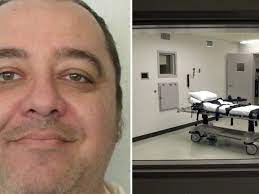
Mr. Smith and his lawyers last week asked the Supreme Court to give them the death penalty, arguing that a second attempt to execute Mr. Smith would amount to cruel and unusual punishment and violate the Eighth and 14th Amendments. He requested that the execution be halted.
On Wednesday, a judge denied Smith’s motion. They made no statements in the short order and saw no dissent.
Still, litigation continues ahead of Smith’s scheduled execution by nitrogen hypoxia, a method only approved by Alabama, Oklahoma, and Mississippi, and no state uses. Only Alabama, which adopted the method in 2018, has that procedure in place, and officials have indicated they plan to administer nitrogen to Smith through a mask.
Attorneys for Mr. Smith also filed a separate appeal Wednesday with the U.S. Court of Appeals for the 11th Circuit. The court also refused Wednesday evening to stay Smith’s execution, saying “Smith does not present a significant prospect of success in light of his allegations.” “Issuance requires further requirements,” the court said in its ruling.

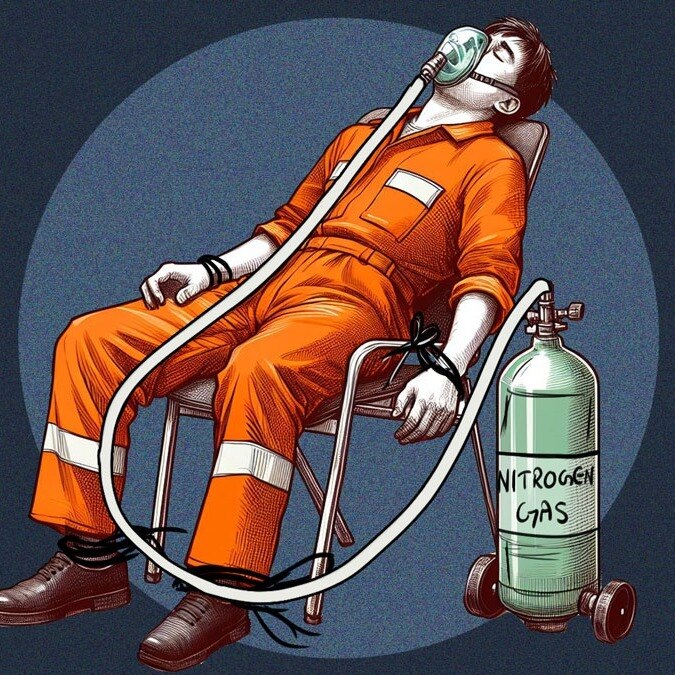
In a request to the 11th Circuit Court of Appeals, Smith’s attorneys said the state of Alabama changed its execution plan by changing the timing of Smith’s last meal.
Lawyers said the change was made in response to evidence that Smith had been “repeatedly vomiting.” This is one of several concerns previously raised by Smith and state critics that he might vomit into the mask, causing vomiting or choking. and increases the risk of painful death.
“While there is no doubt that a stay of execution is the exception and not the rule, we can imagine a more unusual case in which a state seeks to apply a new protocol to a method that has never been used before. “Executions are carried out according to a schedule that continually changes within 48 hours before the execution is scheduled to begin,” the attorneys wrote.